Frozen foods are the reason a lot of people bought an air fryer in the first place. Fries, mozzarella sticks, chicken nuggets, dumplings: they all come out crisper than the microwave and faster than the oven. The catch is that most bags of frozen food were written for a conventional oven, so their instructions don't tell you when or how often to shake the basket. Get the interval wrong and you end up with pale, soggy spots on one side and dry, overcooked bits on the other, or you're standing at the counter opening the drawer every two minutes just to be safe.
This guide breaks down how often to shake different frozen foods, how to use your air fryer's timer so you don't have to babysit it, and how to tell if your machine needs more or less attention than average.
Why frozen food needs a shake in the first place
Air fryers cook by blasting hot air around the basket, and that air needs a path through the food to work evenly. Frozen food comes packed with surface ice and moisture that has to burn off before browning can start. If pieces are piled on top of each other, the ones on the bottom stay damp because they're shielded from airflow, while the top layer dries out and can even scorch before the bottom catches up.
Shaking (or flipping, for delicate items like stuffed pastries) redistributes the pieces so every side gets a turn facing the hot air. It also knocks loose any ice crystals that have melted into a slick coating, which speeds up crisping. Skip the shake entirely and you'll usually get food that's cooked through but unevenly browned, sometimes with a soft, steamed patch where pieces touched.
Set yourself up so you barely need to check
The single biggest factor in how often you need to open the basket isn't the shake schedule, it's how the food was loaded to begin with.
Spread frozen pieces in one layer with a little space around each one. A basket that's overfilled will always need more frequent shakes and longer total cook time, because the air simply can't reach every surface. If you're cooking a large bag of fries or a family-size batch of nuggets, it's usually faster overall to run two batches in a single-basket, 3.5 to 6-quart model than to cram everything into one crowded batch. Dual-basket and dual-zone models (roughly 8 to 10 quarts combined, split into two smaller compartments) let you cook two full batches at once without stacking, which cuts down on how often either basket needs attention.
Most basket-style air fryers in the 1,400 to 1,800-watt range will cook a single layer of frozen fries or nuggets in twelve to sixteen minutes at 400°F. Higher-wattage machines and oven-style units with a larger interior sometimes run a bit faster or need a slightly lower temperature to avoid over-browning, so treat any time here as a starting point and watch the color the first time you cook a new product in your specific machine.
Skip preheating for most frozen foods. Frozen fries, tots, and breaded items are usually formulated to go straight from freezer to hot basket, and preheating an already-fast-cooking food can push the outside past done before the inside catches up. Check the bag: if it says "no preheat needed," believe it.
Shake intervals by food type
Think of the total cook time as being cut into two or three roughly equal segments, with a shake at each break point rather than a fixed number of minutes. That way the interval scales automatically whether your machine runs on the fast or slow side.
Fries, tots, and hash browns. These are the most forgiving. One shake at the halfway point of a twelve to eighteen-minute cook at 380°F to 400°F is usually enough. Thin shoestring fries can get away with a single shake; thick-cut steak fries or waffle fries benefit from two shakes, roughly every five to six minutes, since the dense centers take longer to catch up.
Chicken nuggets, popcorn chicken, and fish sticks. Shake every five minutes in a cook that runs ten to fourteen minutes at 380°F. These pieces are irregular and tend to nest together, so more frequent shaking than fries actually pays off. Because these are frozen, pre-breaded poultry or fish products, check a few pieces with an instant-read thermometer at the center: poultry items should read at least 165°F, and fish products should reach 145°F. If a piece runs cool, put it back in for another minute or two rather than assuming the batch as a whole is done.
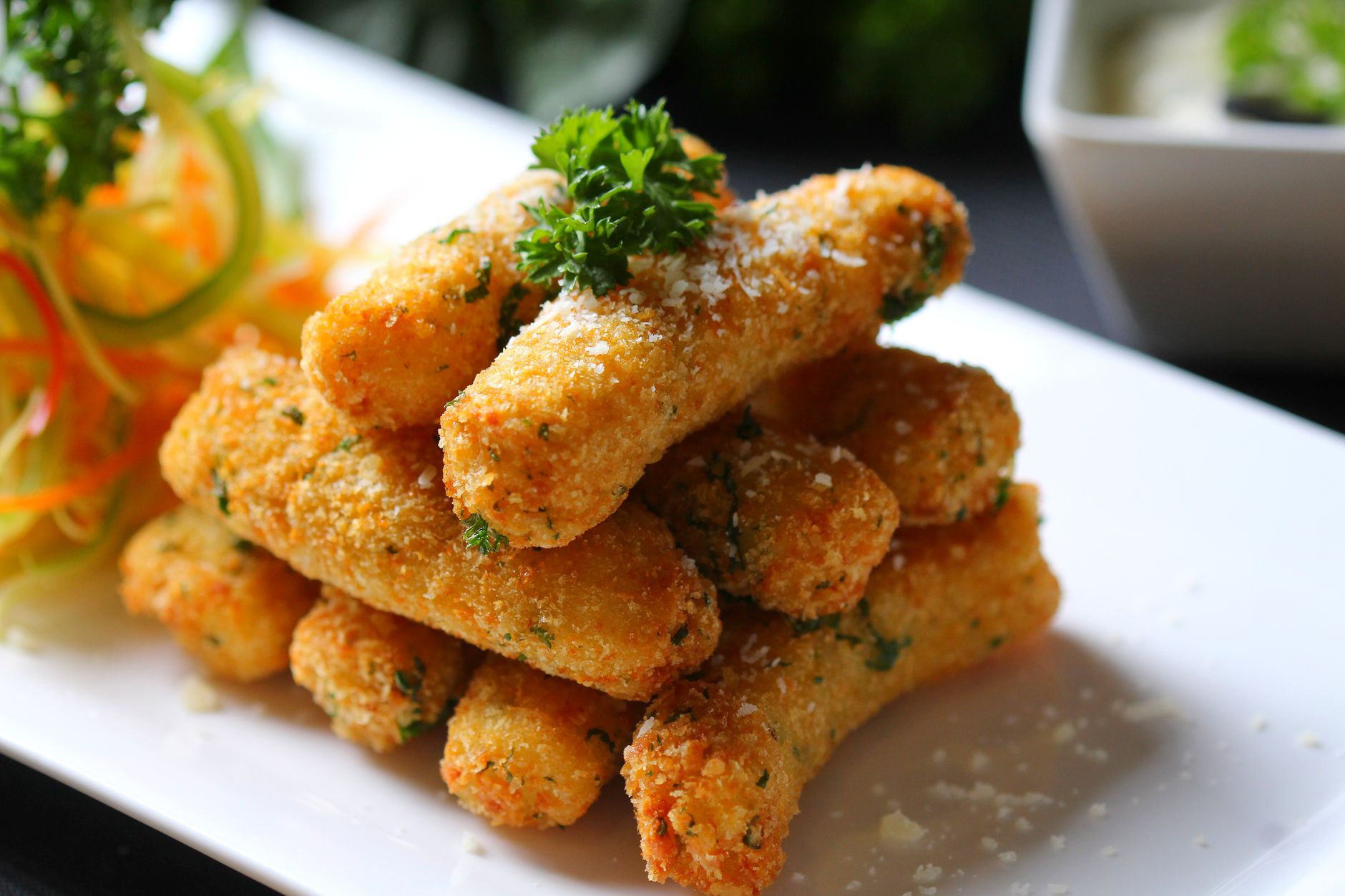
Mozzarella sticks, jalapeno poppers, and other cheese-filled or stuffed snacks. Flip gently rather than shake, since a hard shake can crack the breading and cause a cheese leak. One careful flip at the halfway point of a six to nine-minute cook at 370°F is typically enough. If you notice a couple of sticks starting to split open, pull those out early rather than letting the whole batch cook longer.
Dumplings and potstickers. These do best with a light shake or a gentle flip with tongs every four minutes in an eight to twelve-minute cook at 375°F. Frozen dumplings can stick to the basket or to each other during the first few minutes, so an early check around the four-minute mark, even if you're not shaking yet, helps you catch and separate any pieces before they fuse together.
Frozen vegetables (broccoli, cauliflower, mixed veg). Shake once around the midpoint of an eight to twelve-minute cook at 400°F. Vegetables release more moisture than breaded items, so a single mid-cook shake also helps steam escape instead of pooling at the bottom of the basket.
Pizza rolls and egg rolls. Shake every five minutes in a cook that runs eight to eleven minutes at 380°F. These roll around easily, which is actually helpful, since a shake distributes them into new positions with less manual effort than flipping flatter foods.
Using the timer so you're not hovering
Once you know the interval pattern for a given food, you don't need to stand there watching the clock. A few habits make the whole process closer to hands-off:
Set the air fryer's built-in timer for the full cook time, then set a second, separate kitchen timer or phone alarm for just the shake point (or points). That way you're only walking over to the kitchen twice or three times total, not checking every ninety seconds out of anxiety that you'll miss the moment.
If your model has a pause-on-open feature, which most basket-style air fryers do, pulling the basket out to shake it doesn't reset or restart the cook, it just pauses the countdown until you slide it back in. This means there's no penalty for taking an extra few seconds to shake thoroughly rather than rushing.
For food you cook often, like a standard bag of fries, write the time and shake schedule on a sticky note on the machine itself, or save it in your phone's notes app. After a few repeats you'll stop needing the reminder, but it removes the guesswork during the first several batches when you're dialing in your specific unit.
If you have a model with a see-through window and interior light, you can often judge progress by color through the glass without opening the drawer at all, which is the closest thing to a truly hands-off frozen-food cook.
Signs you're checking too much (or too little)
If you're opening the basket every couple of minutes and the food looks identical each time, you're checking more than the food needs, and each opening lets heat escape, which can quietly stretch out the total cook time. On the other hand, if you consistently pull food out to find one side pale and soft while the other is dark, that's a sign your interval is too long, or that the basket is loaded too full for the airflow to reach every piece evenly. Adjust the shake count up or down by one and you'll usually land on a rhythm that matches your specific machine within a batch or two.
FAQ
Do I really need to shake frozen food, or can I just flip it once? For loose pieces like fries, tots, and nuggets, a shake works better than a single flip because it redistributes every piece, not just the top layer. For delicate stuffed items like mozzarella sticks or dumplings, a gentle flip with tongs is safer than a vigorous shake, which can crack breading or split wrappers.
Why does my frozen food come out soggy even though I shook it? Overcrowding is the usual culprit. If pieces are stacked more than one layer deep, shaking just moves the crowding around rather than fixing it. Try running a smaller batch in a single layer, or split the load between two rounds.
Should I add oil to frozen food before air frying? Most frozen fries, nuggets, and breaded snacks are pre-oiled at the factory and don't need any extra oil. Frozen vegetables with no coating can benefit from a light mist of oil to help browning, but it's optional rather than required for safety.
Is it safe to cook frozen chicken straight from frozen without thawing first? Yes, most air fryer-ready frozen chicken products are designed to go in frozen. What matters is the finished internal temperature, not whether it started frozen or thawed: use an instant-read thermometer and confirm poultry items reach at least 165°F at the thickest part before eating.
How do I know when to stop shaking and just watch the clock? Once you've cooked the same product in your air fryer three or four times and it's coming out evenly browned on your current schedule, you can trust the interval and stop double-checking with extra opens. If you switch to a different brand or a thicker cut of the same food, treat it as new and re-check the first batch closely.