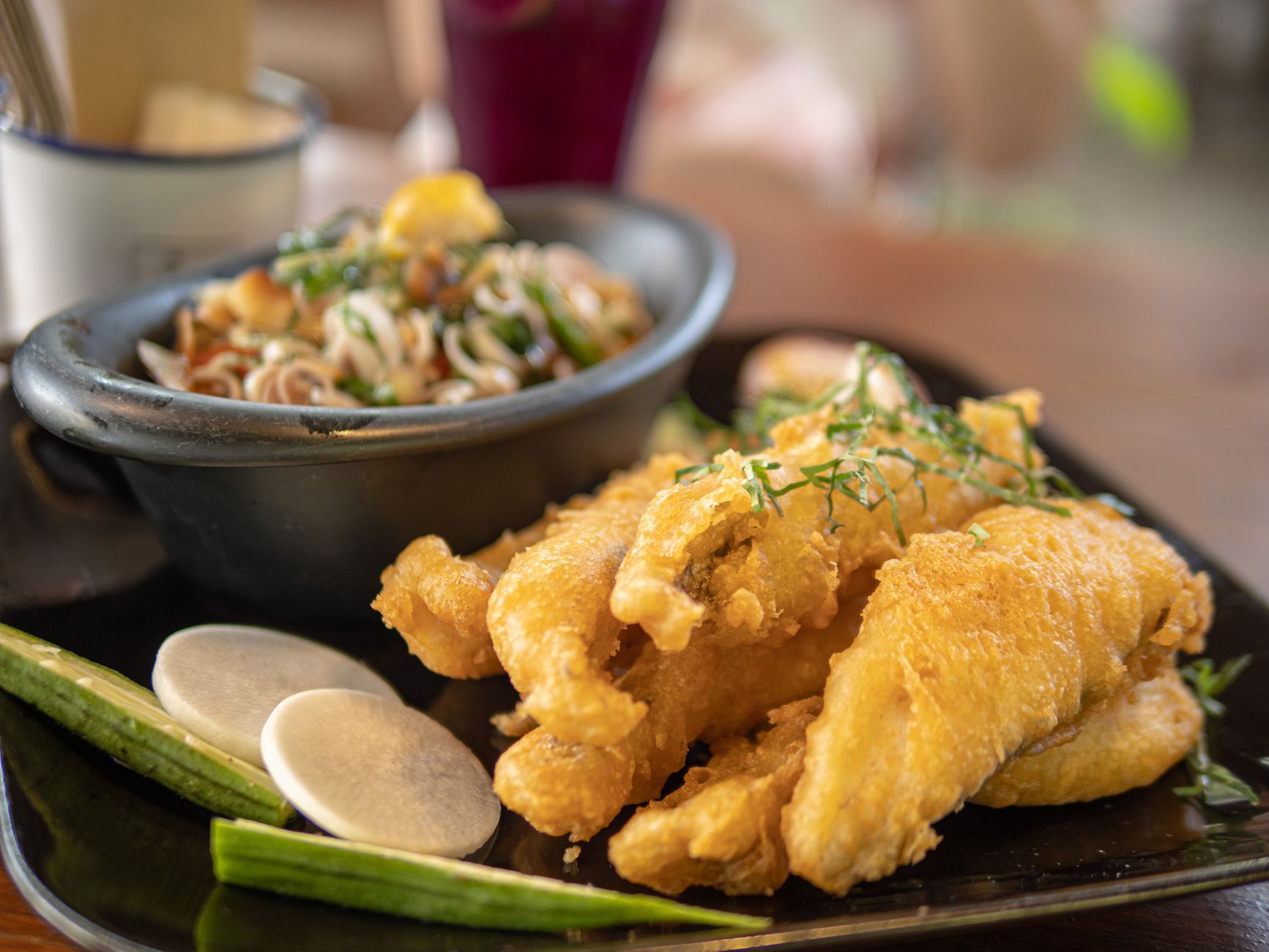
Fish cooks beautifully in an air fryer: the skin crisps, the inside stays moist, and you skip the oil splatter of pan-searing. The tradeoff is smell. Hot air circulating around fish for ten or fifteen minutes pushes its aroma through the whole kitchen and sometimes into the next room. A lot of guides stop at "clean your basket after every use," which helps but doesn't solve the actual problem: the smell happens while the fish is cooking, not just afterward.
Here's a fuller approach that addresses the odor at each stage, before, during, and after cooking, rather than just wiping down the basket and hoping.
Why Fish Smells Stronger in an Air Fryer
Air fryers work by blasting food with fast-moving hot air in a small, mostly enclosed chamber. That's great for crisping, but it also means fish oils and moisture vaporize quickly and get pushed out through the vents at the back or top of the unit. A skillet loses some aroma to the room too, but an air fryer's convection fan actively circulates and expels that air, which is part of why the smell seems to spread faster and stick around longer.
The smell itself mostly comes from trimethylamine, a compound that forms as fish oils break down, along with rendered fat that lands on the basket and continues to smoke and off-gas even after the fryer shuts off. Older or previously frozen fish tends to produce more of it than fish cooked the day it's purchased.
Start With Fresher, Leaner Cuts When Smell Is a Concern
If odor is your main worry, cut choice matters more than most people realize. Fattier, oilier fish like salmon, mackerel, and sardines produce more aroma compounds than lean white fish such as cod, tilapia, or halibut. That doesn't mean you have to give up salmon, just know that a cod filet will fill the kitchen with far less smell for a weeknight dinner when you don't want the whole apartment smelling like the seafood counter for an hour.
Freshness matters just as much. Fish that's a day or two past its prime (still safe, just not at peak) releases noticeably more odor when heated. If you're buying ahead, keep fish tightly wrapped and iced in the fridge, and cook it within a day of purchase when possible.
Marinate or Brine to Cut the Odor Before It Starts
An acidic marinade, lemon juice, vinegar, or even a quick buttermilk soak, breaks down some of the compounds responsible for fishy smell before the fish ever hits the basket. Fifteen to thirty minutes is usually enough; you're not trying to "cook" the fish with acid, just neutralize some of the odor precursors on the surface.
A short saltwater brine (about a tablespoon of salt per cup of water, 10 to 15 minutes) does something similar and also firms up the flesh, which helps thin filets hold together in the basket instead of flaking apart.
Use a Foil or Parchment Sling, Not a Bare Basket
This is the biggest lever most people skip. Instead of laying fish directly on the perforated basket, use a foil sling or a perforated parchment liner sized to the basket.
A foil sling is just a strip of foil folded to be slightly narrower than the basket, with the ends left long enough to fold over the basket rim. It does two things: it catches drips of fat and juice before they fall through to the drawer below and scorch there (that scorched fat under the basket is a major smell source you can't easily see or clean), and it makes lifting delicate filets out much easier than trying to slide a spatula under fish stuck to a mesh basket.
Parchment liners made for air fryers work the same way but let more air circulate underneath, which is better if you want crisp skin on the bottom too. Either way, don't fully seal the fish in foil like a packet unless you're going for a steamed texture. You want airflow around the food, just not directly onto bare metal.
Cook at a Slightly Lower Temperature for a Bit Longer
Blasting fish at very high heat renders fat fast and sends more of it into vapor form, which is part of what spreads the smell so quickly. Dropping the temperature slightly and adding a couple of minutes to the cook time renders fat more gradually and produces noticeably less airborne odor, without sacrificing the crisp exterior most people are after.
For most filets, 380°F works well as a starting point instead of 400°F or higher. Thin filets (under half an inch) may only need six to eight minutes at that temperature; thicker cuts closer to an inch will run closer to ten to twelve. Always confirm doneness with an instant-read thermometer rather than going by time alone: fish is safe to eat at an internal temperature of 145°F.
Ventilate Before You Even Turn It On
Most of the lingering smell problem is really a ventilation problem, not a cooking problem. A few habits make a real difference:
Run your kitchen exhaust fan on high for a few minutes before you start cooking, not just during. This gets air moving in the room before odor compounds are introduced, so they get pulled out faster instead of building up in still air.
If you don't have a strong range hood, or your air fryer sits somewhere without one nearby, open a window near the unit and, if you have one, run a box fan facing outward to actively push air out rather than just crack a window and hope. Position the air fryer as close to the exhaust path as your counter layout allows.
A portable air purifier with an activated carbon filter placed near the cooking area can noticeably cut lingering odor in the air after cooking, since carbon filters are specifically good at adsorbing the organic compounds responsible for cooking smells, unlike a standard HEPA filter which is mainly built for particulates.
Deal With the Basket and Drawer Immediately, Not Later
Once the fish is out, don't let the basket sit. Fat and juice left in a warm basket for even twenty minutes continues to release odor as it cools and semi-solidifies, and it's much harder to scrub off once it hardens.
Most air fryer baskets and drip trays are dishwasher-safe; check your manual to confirm, since a few compact or older models have non-stick coatings the manufacturer recommends hand-washing only. Either way, rinse or at least wipe the basket while it's still warm, then do a full wash within the hour.
A soak in hot water with a little dish soap and a splash of white vinegar for ten minutes loosens fish residue better than scrubbing dry. Vinegar's mild acidity helps break down the same odor compounds you were fighting with the marinade earlier.