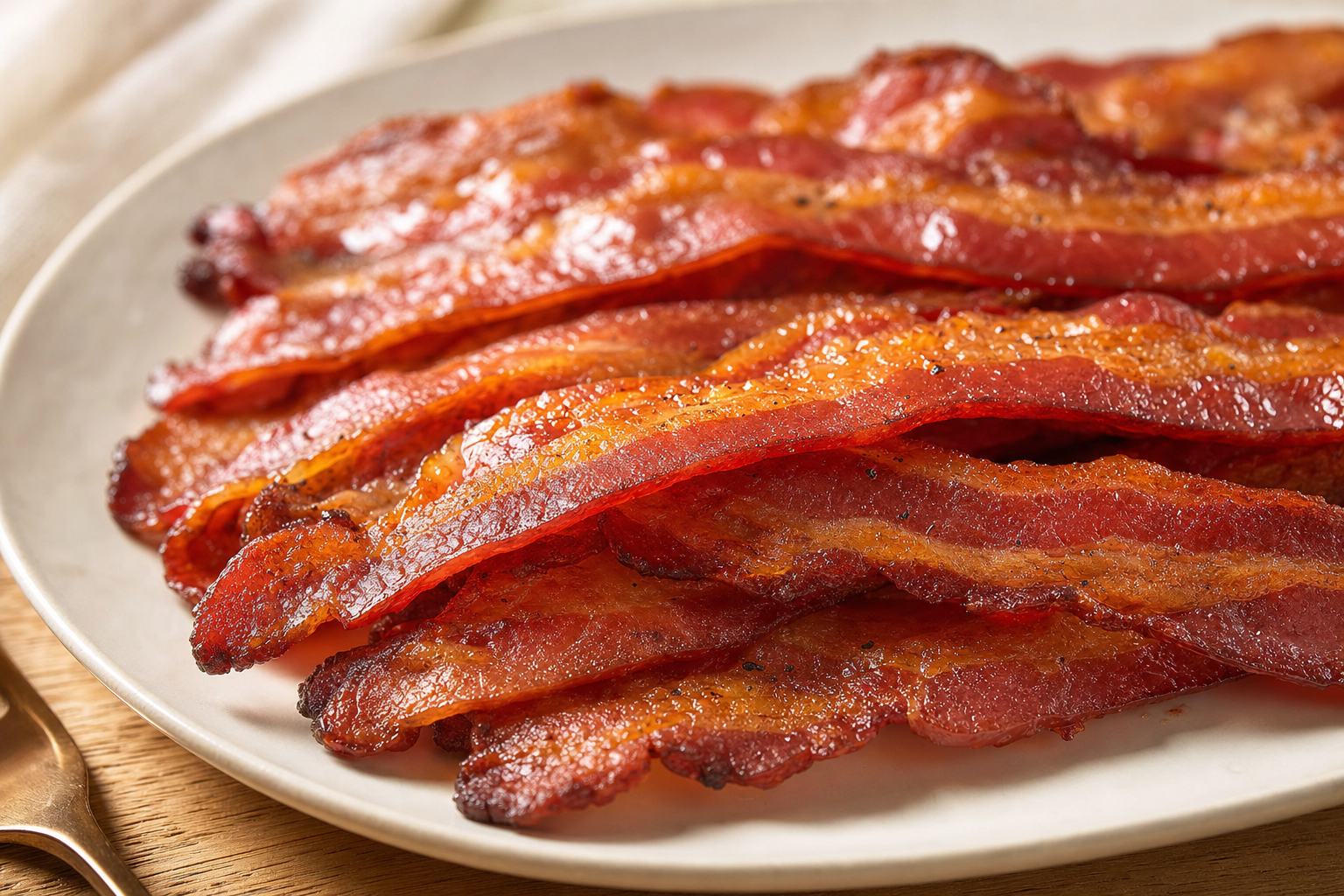
Lay the bacon strips in the air fryer basket in a single layer. Overlapping is fine if the strips are limp going in, but once they start crisping they should have room to lie mostly flat, so don't stack more than two layers deep and separate any that clump. If your basket has a mesh insert with a solid tray underneath, use it: the fat drips straight down and away from the meat instead of pooling under the strips.
No need to preheat for this one. Cold-starting the bacon gives the fat more time to render before the surface browns, which means less smoke and less spatter.
Air fryer: 380°F, 8 to 10 minutes for regular-cut bacon. Check at the 6-minute mark and again every 2 minutes after that, since air fryer models vary and thin bacon can go from perfect to burnt fast. There's no need to flip: the strips crisp on both sides from the hot air circulating underneath and around them, though you can flip once around the halfway point if a few strips are browning unevenly.
For thick-cut bacon, drop the temperature to 360°F and plan on 12 to 14 minutes, checking every 2 to 3 minutes past the 10-minute mark. Thick-cut takes longer to render but scorches just as fast once the fat is mostly gone, so watch it closely near the end.
Pull the bacon when it's deeply golden and firm at the edges. Cured pork like bacon doesn't have a standard "doneness" temperature the way a roast does, but if you want to confirm it's cooked through, an instant-read thermometer should read at least 145°F in the thickest part. In practice, bacon cooked until crisp is well past that point.
Transfer the strips to a paper-towel-lined plate to drain for a minute before serving. If you're cooking more than one batch, let the basket cool slightly and pour off the rendered fat into a heatproof container before starting the next round; hot fat left in the basket can start to smoke on the next cycle.
Tips
- Don't crowd the basket. A few strips at a time with airflow around them crisp far better than a packed layer that steams instead of frying.
- Line the bottom tray (not the basket itself) with a small piece of foil to catch drips and make cleanup a wipe-down instead of a scrub. Keep foil away from the heating element.
- Bacon thickness varies a lot by brand, so treat the first batch as a test run and adjust time by a minute or two for the next one.
- Save the rendered fat in a jar in the fridge if you cook with bacon grease; it strains easily right out of the tray.
FAQ
Do I need to preheat the air fryer for bacon? No. Starting cold gives the fat more time to render slowly, which cuts down on smoke and keeps the strips from scorching before the inside cooks.
Why is my bacon still soft after the recommended time? Bacon thickness and air fryer wattage both vary, so the times above are a starting point. Add time in 1 to 2 minute increments and check often once you're near the end.
Can I cook bacon and other foods together in the same basket? It's best to cook bacon on its own since the rendered fat can splatter and drip onto anything below it. Cook bacon first, then wipe out excess fat before air frying anything else.
Is it safe to reuse the fat that drips off? Yes, if you strain it and refrigerate it promptly, rendered bacon fat keeps for a few weeks and works well for cooking vegetables or eggs.
Why does my bacon curl up so much? Some curling is normal as the fat renders and the strip shrinks. Using a flatter, single layer and not overcrowding the basket helps keep it from curling too tightly.
Comments (0)
No comments yet.