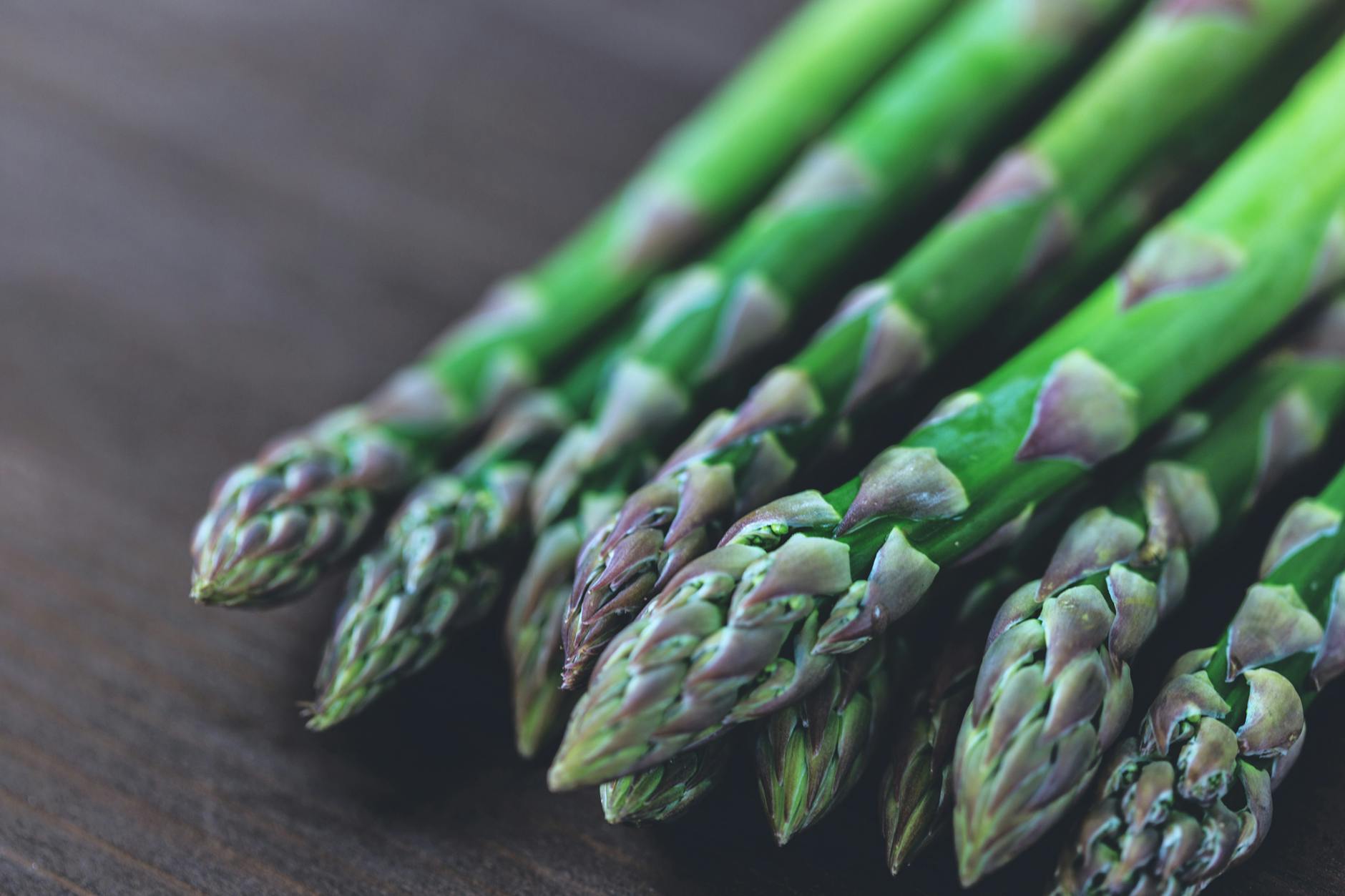
Asparagus is one of the easiest vegetables to ruin in an air fryer: too long and the tips turn to ash, too short and the stalks stay tough. The good news is that asparagus cooks fast, usually under ten minutes, so a little attention to spear thickness and basket spacing gets you tender-crisp results without much oil.
Why Asparagus Is Easy to Overcook
Asparagus tips are thin and full of surface area, so they dry out and darken well before the thicker base of the spear is tender. That's why so many home cooks end up with charred, bitter tips sitting next to stalks that still taste raw near the cut end. The fix isn't a lower temperature, it's matching the cook time to the spear's actual diameter and trimming off the woody bottom inch or so before cooking, since that part never softens properly anyway.
Prep That Actually Matters
Rinse the spears and pat them fully dry. Wet asparagus steams instead of crisping, and any water clinging to the basket holes can cause sputtering. Snap or trim off the tough bottom ends (bend a spear near the base and it will naturally break where the fibrous part ends), then toss the spears in a small amount of oil, about a teaspoon per pound is usually enough. You want a light, even coating that just glosses the surface, not a pooled layer that will drip and smoke. Season with salt and pepper before cooking; anything with sugar (like a glaze) is better added toward the very end so it doesn't burn.
Timing by Spear Thickness
Most air fryer manufacturers don't publish an asparagus setting, so timing comes down to thickness and your machine's actual airflow, which varies by brand. Use these as a starting point at 380°F, then check for doneness rather than trusting the clock alone:
Thin, pencil-width spears typically need about 5 to 6 minutes.
Medium spears, the most common grocery-store size, usually take 6 to 8 minutes.
Thick, asparagus-stalk-sized spears can run 8 to 10 minutes.
Give the basket a shake or flip the spears with tongs halfway through so both sides get even color. If your machine runs hot or has a tightly packed basket, check a minute or two early the first time you make a batch, then note what worked for next time.
How to Tell It's Done
Asparagus doesn't have a food-safety internal temperature the way meat does, since it's a vegetable, so doneness here is about texture, not a thermometer reading. Pull a spear out and pierce the thickest part with a fork or the tip of a paring knife. It should offer slight resistance and then give way, not feel raw and fibrous, and not go limp and mushy. The tips should look lightly browned or blistered in spots, not blackened. If you're cooking asparagus alongside a protein, note that any meat or poultry in the same batch still needs its own USDA minimum internal temperature confirmed with a thermometer (poultry 165°F, ground meats 160°F, whole beef or pork cuts 145°F with a 3-minute rest, fish 145°F), since vegetable doneness and meat safety are separate checks.
Basket Loading and Batch Size
Asparagus needs room for hot air to circulate around each spear, so avoid piling it in a thick heap. In a single-basket air fryer, one layer that mostly covers the bottom of the basket, with spears not stacked on top of each other, will crisp far more evenly than a crowded pile that steams itself soft. If you're cooking for a crowd, it's better to run two shorter batches than one overloaded one. Dual-basket or oven-style models with a wire rack tray give you more surface area, which helps if asparagus is a regular side dish in your house.
Preheat and Temperature Notes
Some air fryers preheat automatically when you set a temperature and start the cycle, others need a manual preheat step, and a few basket models barely need preheating at all for something this thin and fast-cooking. If your model has a distinct preheat function, running it for two or three minutes before adding the asparagus helps the spears start crisping immediately instead of slowly coming up to temperature while sitting in a cool basket. Without preheating, just add a minute or so to the low end of the time ranges above.
Flavor Variations Without Extra Sogginess
Garlic powder, lemon zest, and grated parmesan all work well because they're dry or low-moisture additions that won't create steam. Fresh minced garlic can scorch and turn bitter at these temperatures, so if you want real garlic flavor, add it in the last minute or two of cooking rather than at the start. A squeeze of fresh lemon juice, on the other hand, is best added after cooking, right before serving, so the acid doesn't dull the color or add extra moisture during the cook.
Cleanup
Asparagus doesn't render fat the way meat or bacon does, so cleanup is usually light: a quick wipe or rinse of the basket. Most basket and tray inserts are dishwasher-safe, but it's worth checking your model's manual since some nonstick coatings hold up better with hand washing over time.
FAQ
Do I need to peel or trim asparagus before air frying? You don't need to peel it, but trimming the tough bottom inch or so is worth doing. Bend the spear gently near the base and it will snap naturally at the point where the woody part ends, which saves you from guessing with a knife.
Can I air fry frozen asparagus? Yes, though it releases more moisture as it thaws, so expect a slightly longer cook time and a softer texture than fresh spears. Cook it straight from frozen rather than thawing first, and check it a couple minutes past the times above.
Why did my asparagus turn out chewy instead of tender? This usually means the spears were on the thicker side but got a thin-spear cook time, or the basket was too crowded for even heat. Try a slightly longer cook and make sure spears aren't overlapping.
Do I need to flip the asparagus? A shake or flip halfway through helps, especially in single-basket models where airflow is stronger on one side, but it's not strictly required for a thin vegetable like this the way it is for something thicker like chicken thighs.
Can I cook asparagus at the same time as chicken or another protein? Only if your air fryer has a dual-basket or dual-zone design, since asparagus and meat need different times and the vegetable's shorter cook window means it will overcook if left in for the full time a protein needs. If you're using a single basket, cook the asparagus separately, either before or after the protein.